
After a very bad performance at YCS Mexico, some uneventful months passed by where I wasn’t playing a lot, even Master Duel had Maliss format which was completely miserable. I judged my Doom of Dimensions WCQ instead of playing it, and I unfortunately bubbled at 5-3 in the Justice Hunters regional before that.
Then we got the news that we would have a YCS at Mérida, which is where I live, and I got very excited: finally, a YCS where I had home field advantage, since I don’t have to worry about hotels, food or transportation.
I started testing like mad, since I believed Labrynth was at the best point in the year it could be with the alleged murder of Vanquish Soul. However, as I playtested more and more, my hopes for the event started to drop.
Mitsurugi turned out to be a much worse matchup than I initially expected, as Purification was a pain in the ass to play through. Mitsurugi variants almost always built up unbreakable boards, and the Dracotail matchup, originally almost a free one, became much harder because of the introduction of Dracotail Sting, which is almost a blowout against Labrynth, completely flipping the matchup.
Worse yet, Vanquish Soul seemed on the rise again, and pure K9 deck started popping up, producing unwinnable gamestates almost exclusively because of Ripper.
Realizing this, I told myself that this would be my last event with Labrynth. Decks playing 2 engines being commonplace is a rough spot when you need 2 cards to stop just one half of the deck, and having good trap cards against every deck in the first place was becoming more and more difficult as decks started getting more and more different problems to solve. I figured that I might as well try to give Labrynth its proper send-off by at least having a Day 2 finish.
Despite all odds, I somehow managed to place 42nd on the event, with an 8-4 finish, bubbling out of the top 32 cut, where lots of people had similar scores as mine.
Can I learn anything from this event? Was I just lucky, or is there a brighter future for Labrynth than what I initially assumed?
Exploiting the Knowledge Gap
I have always known that one of Labrynth’s strengths has been that it works in a different axis as most strategies, requiring players to adapt quickly and interact with their decks different. Also as time passes, people forget more and more what Labrynth can do; mostly people remember vaguely as “that trap deck that can recycle blowout traps”.
However, so many people say this about their rogue strategies, that I stopped believing that surprise was a significant factor in competitive. Sure, people maybe know their lines against Nibiru and not around Daruma Karma Cannon, but does that distinction matter when every hand that they produce can play through the latter?
…Well, actually, yes. I am starting to consider that maybe I underestimated the impact of the surprise factor.
Leveraging Hidden Information

At around round 11 of the YCS, when I was sadly already 6-4 and probably out of top cut, I was playing against a MitsuYummy player, who started with Habakiri. They Summoned Zombie Vampire, and milled me 4 cards (Zombie Vampire can actually be a losing play vs Labrynth because it can benefit a lot from generating GY resources, but sadly I whiffed). They find Cupsy and summon him, searching Surprise. On resolution, I summon Fleurdelis, the Thunderbolt and, since Vampire has 3000 ATK, the Punishment I set is live.

Punishment sends Tri-Brigade Arms Mouser to destroy Cupsy, and Mouser uses her effect to flip the Zombie Vampire face-down, which was in the EMZ. This means that my opponent will NOT be able to keep using their EMZ for the rest of the turn, effectively cutting them out of the Yummy portion of their deck.
At a later stage of the duel, as the game state complicates, and my opponent has already had one of their heuristics turned against them, they missplay their Purification by negating Welcome, even though I had 3 or 4 other trap cards in play.
If my opponent had simply left both Mitsurugis on board and played more conservatively, they would most probably have won the game: I would have a dead Fleurdelis in hand, they would have a Prayers that they could use whenever they wanted instead of being forced to shotgun it to turn on Purification, and my first activation would have lost me a card instead of being able to remove Murakumo from the field before he could be activated.
But in all honesty, how could my opponent have predicted the Fleurdelis? He hadn’t seen it in the previous game, it’s a largely overlooked card from DOOD, and Labrynth is already an out-of-meta deck.
Theory vs Reality
I am mentioning this because one of the reasons that made me have very low hopes for the event was that I was pretty sure that, under perfect play, I would not win most of the games. But what is even “perfect play”, anyway, and where does it happen?
The above matchup was just an example, of course, but I think it’s the clearest one of something that I underestimated a lot when playing with my friends: players are not prepared to deal with Labrynth, and even if they do, they might not be prepared for the specific way that I have built it for and the way I play it, with a lot more removal than what most players usually have.
Sure, maybe with my friends it is different: it is low-stakes playtesting, we are chilling, we allow takebacks very often, and everyone know what I can do, so there is no surprise factor.
But how much I have practiced this deck did give me maybe a bigger edge than what I had previously thought.
Familiarity as an Edge

I have been playing Labrynth for almost a year and a half, and I have tried many things with it. I have tested and considered every Normal Trap under the sun, have done some pretty weird builds (I remember testing Synchro Labrynth way back then), and I have come up with a list that seemingly does a lot of actions that my opponent has to process with much less context than I have.
With that baggage, you can look for ways that your deck can maybe exploit a weakness in the current meta. In my case, it was the fact that Mitsurugi Yummy carriers a lot of bricks for the Mitsu cards, and they indeed enable a very powerful board and very powerful pushes, but it also means that they will play greedy lines that are punished by specific ways that Labrynth interacts with it.
It also means that I was never worried into time, despite playing a control deck. I play super fast, I try to win my games decisively, and know when a game is no longer winnable, so my games don’t use up much of the clock even if they are grindy. In a long, 12-round tournament, this means that I have more time to rest between rounds, my decisions fatigue me less, and I can play at a more stable baseline throughout the event.
Does this mean that a rogue deck can succeed just from intimate familiarity, surprise factors, and lots and lots of work? Hello no, but even if between all of this factors you can accumulate or “steal” 2-5 games each event, that can be the difference between packing your bags at Day 1 and fighting for Top Cut up to the last round.
Besides, that’s not all that this strategy has going for it.
From Set 5 to Burst Speed

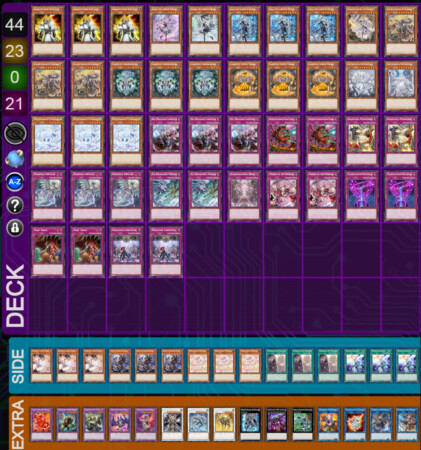
Now, into the actual list and technical play: for this list, my main idea is that I wanted to maximize the amount of ways that I could play going second.
Of course, while Dominus Impulse already gave us 3 more handtraps, it very rarely triggered the Labrynth engine, and it was not efficient in card economy as a 1-use trap card with no more value after the point of usage (in fact, I did not play it in my 2nd place finish in the SUDA WCQ). But if we add up Impulse, Multcharmy Fuwalos, Fleurdelis, Arias and Back Jack plus the furniture cards, we are approaching a critical mass of cards that give this deck plays immediately. We are talking about a trap deck that has 12 handtraps at base, plus whatever value you want to assign to Back Jack and the furnitures.
This configuration makes it so 90%+ of your games you have at least 1 point of interaction.
Importantly, these aren’t your regular punny hand traps, that fire off once, can never be reused, and whose effects are not that powerful. You’re not throwing Infinite Impermanence, Ash Blossom, or Ghost Belle at them. You are resolving Destructive Daruma Karma Cannon, Dominus Impulse, Ice Dragon’s Prison… you name it, all high-impact cards, often with turn-ending effects, that further advance your gameplan by triggering your engine cards.
Evaluating Fleurdelis, The Thunderbolt

I can’t understate how much Fleurdelis, the Thunderbolt matters for this play pattern. She is the final piece that makes this strategy possible. The clearest way she does this is that she adds 3 handtraps to the deck with amazing synergy with the rest of the engine. While Arias and Back Jack are great, they are not enough to make the deck feel reliably online when going 2nd.
I think she is a massively underexplored card right now, boasting lots of advantages.
Her obvious effect is that she can setup a Dogmatika Punishment (or a Quadogmatika Punishment, more on that later) from the deck and activate it immediately against most decks. Right now, she trades favorably into most decks: I talked about how decks that use Mitsurugi as an engine have to play into it, but Dracotail can’t do anything to stop it, giving you a chance to remove Dracotail Sting from the field before it can do anything, which is really the only card that you care about in that deck.
Against K9, it can help force out K9 Ripper materials without losing on card advantage. It can then threaten the Ripper itself, as Fleurdelis can beat over it, or, if A Case for K9 is active, that actually just triggers Fleurdelis right away.
If your opponent is on any kind of Fiendsmith variant, then when Fiendsmith Sequence summons Fiendsmith Desirae, you can destroy the Sequence and return the Desirae to the deck with Golden Cloud Beast – Malong.
Even pure Yummy can turn it on with Yummy Mignion, but even if it doesn’t, just having a 2.5k body that threatens Herald of the Arc Light or any of the Synchro monsters is already pretty cool.
I could stay here all day talking about other applications, such as against Onomatopoeia decks, Ryzeal variants, Maliss, you name it, but I think I’ve made my point: while not optimal against every deck, most decks have to play into it.
Fleurdelis as an Engine Piece

That’s not where it ends, though. Since she can make a monster leave the field by a Normal Trap effect, she can instantly reset any furniture that you may have drawn with her, which is usually not trivial on T0 plays as it makes your engine all the more efficient. She can discard Transaction Rollback or any card that might have GY effects such as Absolute King Back Jack or The Black Goat Laughs thanks to Enigmaster Packbit, providing 2 points of interaction by herself and effectively working as the 7-9 copies of furniture under some circumstances.
She is also a level 8 LIGHT monster, which means that she and Stovie Torbie and make a LIGHT + DARK Chaos Angel if you haven’t fired Punishment, as she doesn’t lock you from the Extra Deck.
Most importantly, she gives you a body that you can bounce back tot the hand with Big Welcome Labrynth, and that’s when she starts to get really insane, as it means that she can generate you more than 1 trap card, giving Lovely Labrynth the chance to maybe set something else as she can guarantee your engine will trigger again the next turn.
High Ceiling, Low Floor
Fleurdelis is not without flaws, so I don’t necessarily think she is an instant 3-of:
Against some decks, it is not ideal to wait so much or they might not have a proper opening into it. I opened it once against a Maliss player, where I think it could have won be the game, but I played into Triple Tactics Thrust and my opponent ripped a Dominus Impulse from my hand with Triple Tactics Talents. It will also do nothing against pure Mitsurugi. There are other decks where it will do nothing.
She is kind of mediocre going first, though there are ways to mitigate this with Salamangreat Almiraj, which can be summoned with Stovie Torbie, Cooclock, any Mulcharmy monster, and with Back Jack in a pinch (though this will reshuffle your Back Jack topdeck).
She is also a LIGHT monster, meaning that she conflicts with Dominus Impulse, so that means that sometimes you need to decide if you should awkwardly hold the Impulse to maximize your disruption, or maybe have a dead card in your hand after using it. In my opinion, this isn’t as big of a deal as it might be, especially since you will not actually draw them together that often, but it is something to keep in mind.
Every Trap Card Explained

I only played two copies of Trap Trick, which I believe was a mistake. I needed to make space somewhere and I decided to cut one copy of it, but I should actually just have cut Ecclesia and played the third copy.
Although my trap lineup is similar to that as of my 2nd place WCQ finish, I actually do try out several trap cards each format, trying to have a good variety of removal and utility between them. Here is my reasoning for sticking with most of them, and what roles they had.
The Heavy-Hitters: Ice Dragon Prison and Dogmatika Punishment.

I would say that these are the two main playmakers for Labrynth right now. Punishment is a good card individually even without Fleurdelis to fetch it, with almost my entire Extra Deck dedicated to this card now. Indeed, even previously niche options like Malong are suddenly becoming very useful for me—bouncing a Ritual Monster to the hand, for example, will make it forget that it was properly Ritual Summoned, pushing the Mitsurugis back significantly as it will be much harder for them to resummon that monster without wasting resources and/or committing to an awkward line.
Mouser, like explained before, was a very important card in certain matchups, and it is also an additional card to send off from Bucephalus, who can finally be disruption. Chimera is as good as ever, reviving anything I want in a pinch, making it very good to play through removal like Murakumo.
IDP in particular was here to remove Murakumo (with Kusanagi from the GY if they had it) to remove resources from Mitsurugi, and that makes it very hard for them to recover. They do have Prayers to play around it, but like I said at the start of this post, they are not expecting it, not to mention there are ways to force it and many hands where they need to blow it as a starter.
Against Dracotail, even if the traps can place monster back from banishment, it still sets them back by denying that resource for a couple of turns and removing a monster from the field (Urgula and Arthallion or Faimena and Gulamel). It is decent into Yummy as well, though Surprise can make it very hard to resolve.
Additionally, it tends to be very good into random rogue decks such as a Blue-Eyes and Evil Twin (both of which I played against in the event), so it’s cool that I had it around.
Tempo play: Daruma Karma Cannon.

To be completely honest, Daruma is not in a great spot right now. The top decks are mostly using Fusion and Rituals, where Daruma does not trade favorably since the monsters it leaves behind are still just as useful.
It has some other uses, though. It can buy you a turn, clog up monster zones, help you dodge negations, remove unaffected monsters, and it is still very good into lots of deck as regular disruption, so I decided to simply cut 1 copies and have it available for Trap Trick access. It wasn’t stellar, it was fine, and depending on how Burst Protocol looks I might keep it at 2 copies in the future.
Versatility: Terrors of the Overroot

While this card reads low-powered (and certainly, a lot of the times it is), I always try to do space for it if I can because of how crazy versatile it is. It removes any card from the field and returns any card from the GY, so work as GY disruption, field disruption, non-destruction removal, and can trigger the Labrynth engine and remove backrow, something that not many Trap Cards can do.
Unlike Ice Dragon’s Prison, it is much less constrained as to when it can be used, so it has many more applications. This makes me feel very “safe”, so to speak, because I know that for every matchup I know I will have at least one good trap card that will trigger my engine.
This format specifically, having a way to remove Dracotail’s backrow was very important especially since this helps you clear Dracotail Sting while removing Urgula and/or Faimena for a turn, which is very good value since playing through Sting is basically a wincon in that matchup.
Utility: Quadogmatika Beast.

Lastly, the new Dogmatika trap from DOOD. This card serves several purposes: it can, of course, recover Lovely Labrynth if she ever gets banished while plusing you, which is much more practical than playing the old Punishment target that used to do it. But it also means that I can send a monster from my ED to my GY without giving my opponent to dodge Punishment, which can be important in some gamestates.
Additionally, this card solves a problem that Fleurdelis and Ecclesia have: once you have Punishment access, they become kind of redundant. Fleurdelis especially really does hurt from this because she just becomes a much slower card if you can’t activate the same card that you Set, so having a secondary target for her is very important.
While I liked this card enough that I tried it out at 2, to be honest it’s a bit bricky, as you’d be surprised by the amount of times that I haven’t had a monster in my GY to revive with this, or maybe I will but until much later in the turn, so I think it’s fine as a 1-of.
Side Decking
Converting Offense into Defense

I had 6 main deck spaces dedicated to going 2nd cards: Fleurdelis, as good as she is, can be awkward to resolve going 2nd. So when going first, it’s better to side her out, and Fuwalos obviously gets sided out when going first, so I have a lot of space to work with. With that space, I sided in cards that help me beat the cards that would beat my deck—cards like Lightning Storm.
As for the other 3 cards, I decided to play Ash Blossom. This is because I was already considering Ash Blossom to beat Dracotail Sting, and I want to be as efficient as possible with my side deck space, so I decided that I would play it over the Fuwalos when going 1st to have more plays even if my backrow gets wiped, and it is still there for any matchups where maybe I have a suboptimal card.
Lord of the Heavenly Prison is also a very natural card to side in backrow decks, but it can also be good when going second sometimes into matchups that have good ways to remove backrow—like Dracotail and Memento—so it had double utility.
I was not playing Nadir Servant this time, sadly, but I am probably going to play it again because of…
Beating K9-Ripper

Ripper with a set Forced Release is an unbeatable board for Labrynth. Forced Release will remove one of your backrow, Ripper will negate almost any of your turn 0 plays OR your plays on your own turn, and then Werewolf will remove any other backrow on the opponent’s turn as soon as you do anything and remove recursion in your GY.
You can’t beat it with Ultimate Slayer, because then they will chain Forced Release. You can’t beat it with Sky Crisis because they will just remove it with Forced Release. You could Kaiju it, but they can still do another K9 Xyz monster with Lupis and you’re still down a card.
Basically, you need a card that can remove Ripper as a Spell Speed 2 to get maximum value from it. The Fallen & The Virtuous falls just in that spot: it will kill the Ripper that is being targeted with Forced Release, taking care of both problems, but it will also replace during the End Phase itself in doing so, by sending Albion the Shrouded Dragon in the End Phase by setting another copy, helping you maintain card advantage.
It also has a very good cycle when you have all three copies in the deck: with the second copy, which was set with Albion, send The Dragon That Devours the Dogma which can search a Dogmatika Trap or Ecclesia. Ecclesia can now search the third copy, which cannot destroy anymore since I don’t have Extra Deck monsters to send, but it can revive any monster in the GY since I have the Ecclesia in the game.
Additionally, I sided one copy of this card when going first instead of the third Arias (since she is less of a high priority draw when going 1st, I usually side out one copy), which was supposed to send The Dragon that Devours the Dogma.
In the future, since I am probably going to cut Ecclesia, I am probably just going to search for a Dogmatika trap with the Dragon that Devours the Dogma, which is still card-efficient. It is not as good as having the Ecclesia available for a revive, or other use cases for her, but I don’t think the small upside is worth not playing the third Trap Trick.
Is Ultimate Slayer Too Slow?

This is another comfort card for me. I try to slam it in in any side deck that I can, as it’s a very high-quality and versatile breaker if you can make the Extra Deck space for it, and I am already playing all its targets anyway. It just makes me feel safe that, if I ever play into a giga negate board or some other high-ceiling deck, I can always board this and have an effective answer against it.
Against this specific meta, it is veery good into pure Yummy since it can send Mouser for Snatchy, you can then flip the remaining Yummy monster face-down. You can then simply pass on a Sky Crisis, beat over Herald and their game gets very slowed down after that.
During this YCS I was trying out siding this into MitsuYummy, but I wouldn’t be able to tell you how it fared as I never saw it in any situation where my opponent had put up a board.
Still, I am starting to see flaws with it. It’s simply not good when my deck has so many handtraps that it can stop my opponent’s board, then this just becomes an awkward draw. Time will tell, but maybe I actually need to lean more into the handtraps instead of a card that allows my opponent to finish setting up when I already have so many tools to stop them.
Despite that, it is also very good vs Branded, as it removes Mirrorjade and one other card on the field, and Burst Protocol might make that deck very relevant, so I might keep it around.
Multcharmy Meowls

This was a much more targetted card, pretty much only siding it because of MitsuYummy (and hey, it covering the Maliss matchup is a nice bonus).
However only time I saw it is when I got sent 1st by an Evil Twin Fiendsmith player, so I can’t really speak much about it.
In the future, depending on how the format looks, I might not be on any Mulcharmy monster. Honestly, I don’t love them in Labrynth, but I don’t regret playing them to beat the high-ceiling decks.
Cut Cards
To keep my versatility in Trap Cards and maintain a high handtrap count, I needed to make some compromises in deckbuilding. Here is what I did.
Labrynth Cooclock

Maybe a super hot take, as I have never seen a furniture Labrynth list without it, but I don’t think we actually need Cooclock anymore. This card is just a bad draw, he’s dead 50% of the time when drawn since you will not have draw any furniture, and even when it is live the lines that it actually enables are very vulnerable. It is only really useful to search when you’re in a stable position, at which point you might not actually need him anymore.
Setting something from Lady Labrynth and then activating it with Cooclock is kind of a pipe dream; when I set something with Lady Labrynth I always did it knowing that it was follow-up; most of the time I am setting Welcome traps. It does feel very good when you can pull it off but it’s still a niche scenario.
In fact, I am already trying out lists without Lady Labrynth herself too, which seems crazy, but she contributed to so many bad hands during the YCS that I am starting to feel like she is just slightly less of a brick than Lovely.
I don’t think I missed this card once in the entire event, and I don’t think it would have won me any games that I lost. In fact, I would say that my worst hands involve having too much engine, given how redundant the Labrynth engine is, which brings me to…
Why only 1 Arianna?

Probably another ultra hot take, but I was quite happy with playing with 1 Arianna.
I started considering when I started to cut down to 1 Arianna when going 2nd, since she is usually not a great draw. It made me start thinking, why even play the second Arianna then? Do I actually need her? I playtested this in Master Duel, which is a different format, but it can give you good information about how your engine works. With just 1 Arianna I got to Master 1, and then I started playtesting it IRL and got pretty comfortable with it.
The great thing about this is that, unlike Cooclock, unless you already have a Normal Summon in your hand (extremely unlikely in this build), she is never actually a dead card, even if not stellar to Normal Summon. Having access to her to create a body to bounce with Big Welcome after searching a furniture is very important, but I think that more importantly, she can draw you 1 card every turn.
My new power play with Big Welcome has thus become to have both Servants on the field, summon Arias and bounce her to the hand, then draw 2 cards to try to find a fresh Trap Card to activate with the Arias that I just searched. The math favors this play since I am playing a critical mass of Trap Cards, and even if I don’t draw a trap card specifically I can draw Back Jack or Fleurdelis.
I suggest you try out the ratio before deciding it is uncalled for. I am not convinced this is always correct in every format, but at the very least I am convinced that 1 Arianna is a completely viable choice depending on how much space the rest of your deck demands and how much actual engine you want to play.
Paleozoic Marrella

In my previous list I mentioned how Labrynth needs to be played as both an ultra-fast deck that spits out all of its hand instantly and as a super slow strategy where you just do nothing and wait.
With the list I played at the YCS, not only do I not have enough space to risk lower-quality Arias and Back Jack finds with the increased monster count, I am also mostly just playing the deck in the high-speed spectrum. While I love playing Marrella, and I did miss it a lot with the abundance of Ghost Belle and Dominus Impulse that we need to play through right now, I don’t think I can prioritize it right now.
The Black Goat Laughs

I actually did want to play this card, it’s very good right now (though the fact that it does not trigger the Labrynth engine has always felt weird to me), I simply decided that Rollback was the better discard.
Despite that, I am starting to try out playing this over Rollback as my premium discard, as it makes the furnitures much more likely to be able to be treated as straight-up “handtraps”, supporting the logic of the overall build.
Since I am not on Marrella anymore, Rollback has lost a lot of its versatility, which is what has made me look into this card more. It has the big, big advantage that it is settable from Back Jack and Arias and being a good discard, which is not something a lot of cards have.
Still, I guess we’ll see. I am trying out no-Rollback lists right now, but I like both cards and maybe there is a way to fit both of them. Unfortunately, there simply aren’t a lot of options between cards that are both good to Set and discard, so our options to choose from are thin.
Extra Deck Choices
This hasn’t changed that much, mostly it’s just Dogmatika Punishment targets, so I am just going to mention some highlights.
The Anti-Mitsurugi Cards—Mouser and Malong

Like mentioned beforehand, Mouser is mandatory for punishing all the greedy Mitsurugi lines. It is also a nice send from Bucephalus, which can finally become disruption instead of advantage if you need to.
In the case of Malong, I decided to play it when trying out Compulsory Evacuation Device with a friend that was playing pure Mitsurugi, I found out how much of a tempo loss it is to bounce back their Ritual Monsters to the hand, which is a lot more valuable than destroying them as they will forget that they were properly Special Summoned. This made Malong situational, but important, and this exact same interaction did win me a couple of games.
It is nice to have around for Ultimate Slayer and for non-destruction removal too I guess.
Is Sky Crisis still good?

Crazy as it might sound, I probably going to cut Sky Crisis. It’s not a bad card by any means, but he’s not brilliant right now, and I really need to make ED space for Mereologic Aggregator, which can negate an opponent’s Arthallion when destroying Dracotail’s Normal Summon, infinitely more useful than the 0 times I summoned him during the event.
This is a card I will most certainly play again in the future, and depending on how much the banlist and Burst Protocol change the format, I might put it back immediately, but it’s not great right now.
OTK partners: Dugares and Chaos Angel

Last time, I mentioned how much I liked having Dugares for fixing my hand where I have too much engine, though this is less of an issue now with the slimmer package that I decided to play.
This time, I used Dugares for something else: OTKs. I did so many OTKs this YCS with Dugares by doubling Chaos Angel’s ATK, pushing it to 7,000, for a total of 8,200 damage with itself + Dugares.
This is such a cool card and I love that I keep finding use cases for it, and I hope to have space to play it again, but strictly speaking, it is not necessary. If I go back into Nadir Servant, I might need to cut this to play Cambroraster again, so I just thought I’d share that this is a good OTK tool too.
Conclusions
Is Labrynth a secretly great rogue anti-meta pick that can sac your opponent every game and it’s super underappreciated? Well, not really. Like I said at the beginning, I was not loving my chances in this event, but a combination of the surprise factor, good technical play, and intimate knowledge of the meta strategies helped me achieve a decent finish, though sadly just cut short of the top 32 cut. While not exceptional, it was a lot better than I expected, going toe-toe-toe with many people that did end up topping.
Is this Really Lab’s Last Dance?
Well, I said it would be, right? After I got the beating that I was 100% expecting at the YCS, I said that I would drop the deck and this would just be its last event until we got new support.
…Then I proceeded to do a lot better than I thought I should, missing top cut because of a combination of a couple of unplayable hands on Day 2 (biggest culprits being Lady Labrynth and Transaction Rollback here, which is why I am considering not playing them anymore), so I am feeling a bit more hopeful about it.
If I think back on my history with the deck, I’ve actually done consistently good on most events, despite my lack of tops: I placed 42nd here, went 5-3 in my last regional placing around the 30th place in a 190ish WCQ, got 2nd place at the WCQ before that, placed 33rd at YCS Cancún (the one that TeamSamurai won, and bubbling out of top 32 again), and did another Day 2 placement in the Continental qualifier in Mexico during the height of Tenpai/Snake-Eyes format, again fighting for a top cut placement to the very last round. The only event where I have actually done horrible is YCS Mexico and, well, I just want to say that it is not really representative of anything.
In each of these events I expected to do terrible, and I think I have always attended with the mentality that it’s only been luck carrying me thus far. And hey, maybe it is, but I can’t deny how salty I feel that I keep bubbling my Day 2 finishes and how many top cuts I have missed simply due to bad tiebreakers, as almost every event I am tied with people that did top.
After all, I am not playing this deck because I think it’s a super strong meta call (it’s not), I am playing it because I like it, and I like finding solutions to every format with it. I like going through Trap Cards and evaluating its applications every format, I like that I don’t have any real “combos” that I am looking for every game, I like that the game state gets complicated very quickly, and I really like catching players off-guard.
So who knows, I might (probably will) take this into YCS Guadalajara, and give the deck another shot. I would love to be the first Labrynth YCS top in 2026, and while I still don’t love my chances (indeed, I might switch to Dracotail or Branded, it all depends on the banlist), with so many repeated Day 2 finishes, maybe I should start believing a bit more in my play and stop expecting every event that I attend to be a bust.
But hey, if you are interested in more Labrynth guides, content, or have any questions, feel free to shoot me a message. I have considered maybe streaming some Master Duel or Dueling Book ladder gameplay.